
Camping in Barkly
6 campgrounds · 1 with powered sites · 2 with showers · 4 with tent sites
The Barkly is big, open country on the Stuart Highway, and the camping here is mostly a stop on the long drive between Darwin and Alice Springs. That is not a bad thing: Tennant Creek was the site of Australia's last gold rush, and some of the Territory's most striking rocks are a short drive off the road.
Where is the best place to camp in Barkly?
Tennant Creek is the main base, with caravan parks in town such as Tennant Creek Caravan Park. Further north, Elliott is roughly halfway between Darwin and Alice Springs, and heading south, the Wauchope Hotel Campground has powered sites and showers and is the closest camp in our list to Karlu Karlu. If you are turning east towards Queensland, Barkly Homestead is the stop on the Barkly Highway.
What is there to do in Barkly with kids?
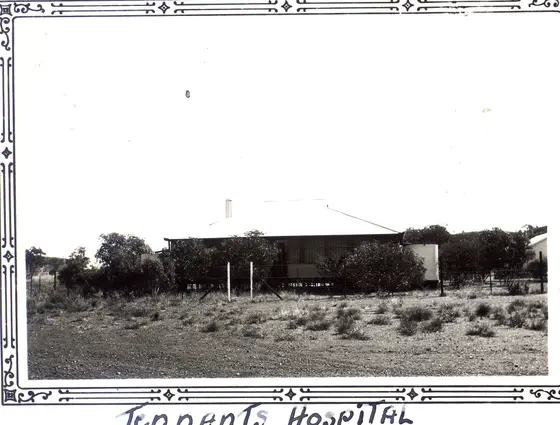
In Tennant Creek, the Battery Hill Mining Centre tells the story of the 1930s gold rush, when the town's mines went on to produce more than 210 tonnes of gold, and Tuxworth Fullwood House is a short drive away. The town's telegraph station, built in 1874, is one of only four original Overland Telegraph stations still standing. Near Elliott, the Jones Store Museum is at Newcastle Waters, about 23 km away.
Tap a card for the full page. Every outing is on the map below too. Distances are in a straight line, so the drive is a little longer.
What are the best walks and sights in the Barkly?
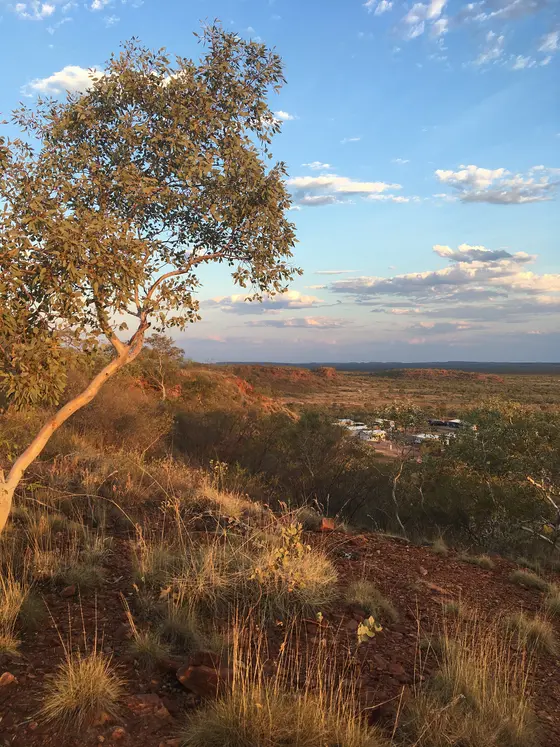
About 100 km south of Tennant Creek, Karlu Karlu / Devils Marbles Conservation Reserve has its famous granite boulders. Closer to town, Mary Ann Dam is a place to stretch your legs, and Bill Allen Lookout is another stop with a view.
When is the best time to go camping in Barkly?
Plan long drives for the cooler months. Tennant Creek's average maximums run from 24°C to 38°C, with records over 45°C, and more than 70% of its rain falls in the December to February wet season. Carry plenty of water whenever you go.
Are there powered sites in Barkly?
Yes. One campground here has powered sites confirmed: Wauchope Hotel Campground. For the rest we are still confirming, so check with the park or holiday park before you book a powered site.
How far is Tennant Creek from Darwin and Alice Springs?
Tennant Creek is about 1,000 km south of Darwin and 500 km north of Alice Springs. Elliott sits between them, about 636 km from Darwin and 761 km from Alice Springs.
Facts from Wikipedia, "Tennant Creek" (CC BY-SA 4.0) and Wikipedia, "Elliott, Northern Territory" (CC BY-SA 4.0).
Map of campgrounds in Barkly
✓ Campgrounds
✓ Things to do
✓ Walks and nature
More around NT
6 campgrounds
Those with the most confirmed facilities first. A missing facility means nobody has confirmed it, not that it is absent.
Campground · Tablelands, NT
Barkly Homestead Roadhouse
Tent sites · Caravan and RV sites · Showers · Toilets · Camp kitchen · Laundry
Barkly Homestead Roadhouse is a campground in Tablelands, NT. OpenStreetMap records 6 facilities. Check availability and current conditions before you travel.
Campground · Davenport, NT
Wauchope Hotel Campground
Powered sites · Tent sites · Caravan and RV sites · Showers · Toilets
Wauchope Hotel Campground is a campground in Davenport, NT. OpenStreetMap records 5 facilities. Check availability and current conditions before you travel.
Campground · Elliott, NT
Elliott Caravan Park
Tent sites
Elliott Caravan Park is a caravan park in Elliott, NT. OpenStreetMap records 1 facility. Check availability and current conditions before you travel.
Campground · Elliott, NT
Midland Caravan Park
Tent sites
Midland Caravan Park is a caravan park in Elliott, NT. OpenStreetMap records 1 facility. Check availability and current conditions before you travel.
Campground · Tennant Creek, NT
Outback Caravan Park
No facilities confirmed yet.
Outback Caravan Park is a caravan park in Tennant Creek, NT. Its facilities have not been confirmed. Check availability and current conditions before you travel.
Campground · Tennant Creek, NT
Tennant Creek Caravan Park
No facilities confirmed yet.
Tennant Creek Caravan Park is a caravan park in Tennant Creek, NT. Its facilities have not been confirmed. Check availability and current conditions before you travel.
Other regions in Northern Territory
Region boundary: ABS ASGS Edition 3 Tourism Regions 2021 (Tourism Research Australia), CC BY 4.0. Campgrounds and facilities from OpenStreetMap contributors (ODbL), the operators’ own listings, and the state park services’ open data: © State Government of NSW and NSW Department of Climate Change, Energy, the Environment and Water 2017 (CC BY 4.0); contains data sourced from the Department of Energy, Environment and Climate Action, Victoria (CC BY 4.0); © State of Tasmania, Parks and Wildlife Service (CC BY 3.0 AU); Main Roads Western Australia road stopping places (CC BY 4.0).